
Let me start with something that might sound defensive but isn’t: I don’t dislike teams because I have trust issues or because I think I’m better than everyone else.
I’ve always preferred solo work because it felt natural. Efficient. Clean.
When I work alone, there’s no back-and-forth about creative direction. No waiting for feedback that comes three days late. No explaining my process or justifying why I do things a certain way. I can move at my own pace, pivot when inspiration strikes, and maintain the rhythm that’s taken me years to develop.
It’s not stubbornness. It’s comfort. And for a long time, that comfort served me well.
But lately, something’s been shifting in my mind. A quiet voice that keeps asking: what if this preference for solo work isn’t serving me anymore?

The Beauty of Solo Rhythm
There’s something almost addictive about the flow state you can achieve when you’re working completely alone. No interruptions, no compromises, no energy spent on managing personalities or navigating different work styles.
When I’m editing a video, writing a blog post, or developing a new course, I slip into this zone where hours pass like minutes. I know exactly how my brain works. I know when I need a break, when I need to push through, when an idea needs to marinate overnight.
This isn’t just about productivity—it’s about preserving creative energy. Every collaboration, no matter how well-intentioned, requires emotional bandwidth. You’re not just executing your vision; you’re communicating it, defending it, sometimes compromising it.
I used to think this was the smart approach. Why complicate things when you can handle them yourself? Why split profits when you can keep them whole? Why risk miscommunication when you can maintain complete control?
The solo approach felt like the ultimate expression of self-reliance. And in many ways, it was working. My projects moved quickly from concept to completion. My overhead stayed low. My creative vision remained intact.
But somewhere along the way, I started noticing the limitations.

When Solo Becomes a Ceiling
The first crack in my solo-work philosophy came during a particularly intense project launch. I was handling everything: content creation, social media, email marketing, customer service, technical troubleshooting. I was good at all of it, but being good at everything meant being great at nothing.
More importantly, I realized I was spending 60% of my time on tasks that didn’t require my specific skills or creative input. I was editing Instagram Reels when I could have been developing the next course. I was responding to routine customer emails when I could have been writing.
That’s when the word expansion started appearing in my thoughts more frequently—and when I began to understand how proper systems could transform this chaos.
What if I hired a video editor? Someone who could handle the technical aspects while I focused on creative direction? What if I brought in a virtual assistant to manage the routine communications that were eating up hours of my day?
The idea felt simultaneously exciting and terrifying. Exciting because I could see how much more I could accomplish. Terrifying because it meant letting go of control, training someone to understand my standards, and trusting that the work would meet my expectations.
But the real question that kept nagging at me wasn’t whether I could find good people. It was whether I was holding myself back out of comfort rather than strategy.

The Internal Audit
I started examining my resistance to building a team more honestly. Was it really about efficiency, or was it about something deeper?
Part of it, I realized, was perfectionism in disguise. When I do everything myself, I maintain complete control over the outcome. But control isn’t the same as excellence—sometimes it’s the enemy of it.
Part of it was also about standards that I hadn’t clearly defined, even for myself. How could I expect someone else to meet my expectations if I couldn’t articulate what those expectations actually were?
But the biggest realization was this: my preference for solo work had evolved from a strategic choice into a comfort zone. And comfort zones, while pleasant, don’t facilitate growth.
I wasn’t avoiding teams because they were ineffective. I was avoiding them because building effective teams requires skills I hadn’t developed yet. Leadership, delegation, systems thinking, clear communication of vision and standards.
Working alone allowed me to skip those challenges entirely. But it also capped my potential—preventing the kind of strategic expansion that defines the wealth mindset.

How the Wealthy Think About Teams
This shift in thinking led me to study how successful entrepreneurs approach team building. What I discovered challenged a lot of my assumptions about the wealth mindset.
Most wealthy people didn’t start with teams. They started exactly like me—doing everything themselves, figuring out what worked, developing their own systems and standards. But here’s the key difference: they saw solo work as a phase, not a destination.
They used their solo period to establish three critical things:
First, they identified their unique value—the specific contribution that only they could make. Everything else became a candidate for delegation.
Second, they developed clear systems and standards that could be taught and replicated. Their way of doing things wasn’t just intuitive anymore; it was documented and transferable.
Third, they built the financial foundation that made hiring possible without jeopardizing their business stability.
But most importantly, they shifted their identity from “doer” to “leader.” They stopped measuring their value by how much they could personally accomplish and started measuring it by how much they could enable others to accomplish.
This wasn’t about ego or laziness. It was about scalability—the core principle of smart execution. They recognized that their personal capacity, no matter how optimized, would always be limited. But their ability to create systems and lead teams was potentially unlimited.
The Rhythm Test
As I studied these patterns, I developed what I now call the “rhythm test.” Instead of asking whether I could do something better myself, I started asking whether bringing in help would enhance or disrupt my creative rhythm.
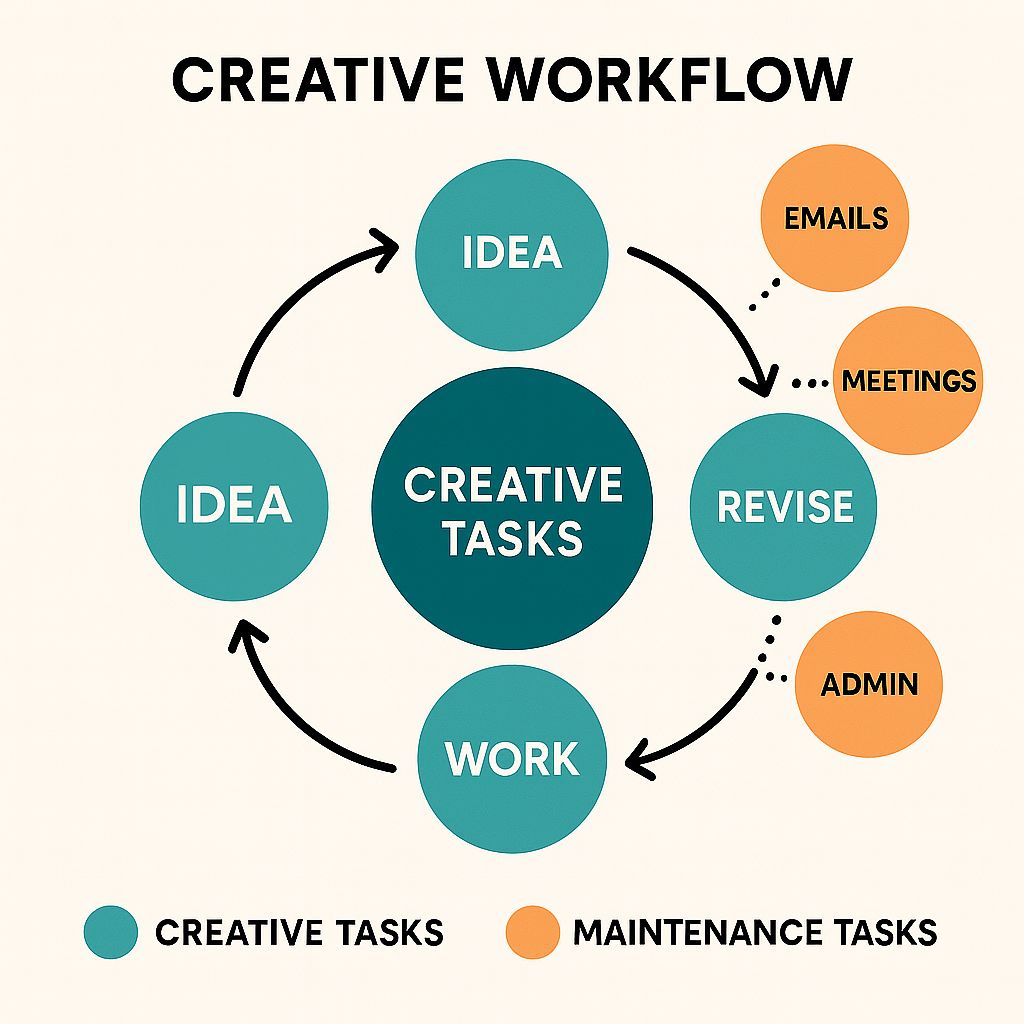
Some tasks, I realized, were integral to my creative process. Writing, for instance, isn’t just about producing content—it’s how I think, how I process ideas, how I maintain my connection to my audience. Outsourcing that would be like asking someone else to do my thinking for me.
But other tasks were actively disrupting my rhythm. Scheduling social media posts, responding to routine inquiries, handling technical troubleshooting—these weren’t creative acts. They were maintenance activities that pulled me out of flow state.
The wealthy understand this distinction instinctively. They protect their highest-value activities fiercely and systematize everything else. They don’t delegate randomly; they delegate strategically, with the goal of amplifying their strengths rather than covering their weaknesses.
This realization shifted my entire perspective on team building. It wasn’t about finding people to do my work for me. It was about finding people who could handle the work that prevented me from doing my best work.
Building Systems, Not Dependencies
The more I studied successful expansion strategies, the more I understood that the goal isn’t just to hire people—it’s to build systems that can function with or without specific individuals.
When wealthy entrepreneurs hire their first assistant, they’re not just buying back time. They’re creating their first system for scaling operations. When they bring in a specialist, they’re not just filling a skill gap—they’re building their capacity to recognize and integrate expertise.
Each hire is an investment in organizational capability, not just individual productivity.
This perspective helped me see my own resistance differently. I wasn’t protecting my standards by working alone—I was avoiding the work of defining and systematizing those standards. I wasn’t maintaining quality by doing everything myself—I was limiting my ability to scale quality.
The wealthy mindset isn’t about working harder or even working smarter in the traditional sense. It’s about building systems that work independently of your direct involvement, while ensuring those systems align with your vision and values.
My Experiment in Letting Go
Armed with this new framework, I decided to run my own experiment in strategic delegation. But instead of jumping straight into hiring full-time team members, I started with what I call “rhythm-tested” outsourcing.
First, I identified the tasks that most frequently interrupted my creative flow. Email management topped the list, followed by social media scheduling and basic video editing tasks that didn’t require creative decisions.
Next, I documented my standards and processes for these tasks in painful detail. Not just what I wanted done, but why I wanted it done that way, what the acceptable variations were, and what the non-negotiables were.
Then I hired freelancers for small, clearly defined projects. A video editor for basic cuts and transitions. A virtual assistant for email filtering and scheduling. A social media manager for posting and initial engagement.
The goal wasn’t to save money—in the short term, it actually cost more than doing everything myself. The goal was to buy back creative time and mental energy while testing my ability to maintain quality through other people. This was my first real experiment with systems-based execution.
The results surprised me. Not because the work was perfect—it wasn’t, initially. But because the process of training others to meet my standards actually clarified those standards for me. I discovered assumptions I’d been making, shortcuts I’d been taking, and improvements I could implement.
More importantly, I discovered that good people don’t just execute your vision—they often enhance it. My video editor suggested transitions I wouldn’t have thought of. My virtual assistant developed organizational systems that were more efficient than my own.
I wasn’t losing control; I was gaining perspective.

The New Framework
Today, my approach to solo work versus team building looks completely different. I no longer default to doing everything myself, but I also don’t automatically assume that delegation is always better.
Instead, I use what I’ve learned from studying the wealth mindset: I protect my core creative activities while systematizing everything that supports them.
I still write my own content because that’s where my unique value lies. But I no longer schedule my own social media posts because that’s a system, not a creative act. I still make the key creative decisions in my videos, but I no longer spend hours on technical editing that doesn’t require creative input.
The shift isn’t just operational—it’s psychological. I’ve moved from measuring my worth by how much I can personally accomplish to measuring it by how effectively I can orchestrate value creation.
This doesn’t mean I’ve abandoned the benefits of solo work. There are still projects where I work completely alone, where I want to maintain complete creative control, where the collaboration overhead wouldn’t be worth it.
But now those are conscious choices based on what serves the project best, not default settings based on what feels most comfortable.
The Wealth Mindset Shift
Looking back, I realize that my journey from preferring solo work to embracing strategic team building mirrors a fundamental shift in how successful people think about value creation.
Early in their careers, most successful entrepreneurs are focused on proving they can do things themselves. They want to demonstrate competence, build skills, and maintain control over their outcomes. Solo work serves all of these goals.
But as they grow, they start to see the limitation of this approach. Personal capacity, no matter how optimized, has a ceiling. Personal expertise, no matter how deep, has boundaries. Personal energy, no matter how carefully managed, is finite.
The wealth mindset shift happens when you stop trying to maximize your personal output and start trying to maximize your systemic impact. When you stop asking “How can I do this better?” and start asking “How can this be done better, with or without me?”
This isn’t about laziness or delegation for its own sake. It’s about recognizing that your highest value often lies not in doing the work, but in designing the systems that enable the work to be done excellently and consistently—the ultimate form of strategic execution.
If you’re working on designing systems and shifting into strategic execution,
this Brain Audio has helped me stay focused and in flow while planning and building.
I listen to it when I’m outlining ideas like this post.
Your Turn to Examine
So here’s my question for you: What’s really behind your preference for working alone?
Is it because solo work genuinely serves your goals better right now? Or is it because building effective teams and systems feels like a challenge you’re not ready for yet?
Are you protecting your standards, or are you avoiding the work of defining and systematizing those standards? Are you maintaining quality, or are you limiting your ability to scale quality?
There’s no judgment here—I’ve been on both sides of this question. But I’ve learned that honest self-examination is the first step toward intentional growth.
Maybe you’re in a phase where solo work is exactly what you need. Maybe you’re building the foundation of skills and systems that will eventually support a team. Maybe you’re just not ready for the complexity that collaboration brings, and that’s perfectly valid.
But if you’re starting to feel that ceiling I mentioned—if you’re sensing that your capacity for impact is being limited by your capacity to personally execute—then maybe it’s time to consider a different approach.
The wealthy don’t build teams because they have to. They build them because they see the exponential possibilities that effective collaboration creates.
What expansion possibilities are you ready to explore?
 Small shifts,
Leave a comment